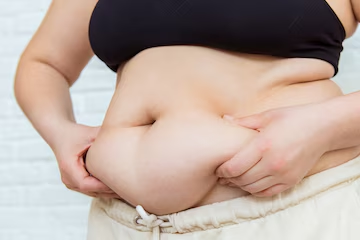
The pursuit of weight loss often focuses on superficial goals—fitting into smaller clothing sizes, seeing lower numbers on the scale, achieving a particular aesthetic ideal. However, physicians specializing in metabolic disorders emphasize that these external markers tell only part of the story. The texture of your abdominal fat provides critical diagnostic information about internal health status that standard weight measurements completely miss.
Understanding this distinction begins with a simple self-assessment. Place both hands on your abdomen and apply moderate pressure. If the tissue beneath your hands feels soft, yielding, and compressible—similar to pressing into foam or soft fabric—you’re primarily dealing with subcutaneous fat deposits. This fat accumulates in the layer between your skin and the muscular abdominal wall, functioning as energy storage and providing some degree of physical protection to underlying structures. While excessive subcutaneous fat carries health implications related to overall obesity, its metabolic impact remains limited.
A hard, tense, or drum-like sensation under your hands tells a starkly different story. This firmness indicates that fat has accumulated not superficially but deep within your abdominal cavity, in the spaces surrounding and infiltrating your internal organs. Medical imaging would reveal fat encasing your liver, wrapping around your pancreas, embedding throughout your mesentery, and filling the retroperitoneal space. This visceral fat distribution pattern carries exponentially higher health risks than equivalent amounts of subcutaneous fat.
The heightened danger of visceral fat stems from its biological activity and anatomical location. Far from being inert storage, visceral adipose tissue functions as a highly active metabolic organ, secreting free fatty acids, inflammatory cytokines like TNF-alpha and IL-6, and various adipokines directly into portal circulation. These substances create a state of chronic low-grade inflammation throughout your body while simultaneously interfering with normal insulin signaling at the cellular level. Your muscle cells, liver cells, and fat cells all become progressively less responsive to insulin, forcing your pancreas to compensate by producing higher insulin levels—a state called compensatory hyperinsulinemia.
Over time, this compensation fails and blood glucose regulation deteriorates, progressing through prediabetes to frank type 2 diabetes. Meanwhile, your liver—already struggling to process the excess fatty acids delivered from visceral fat stores—begins accumulating triglycerides within hepatocytes, leading to non-alcoholic fatty liver disease that can advance to steatohepatitis, fibrosis, and even cirrhosis. Your cardiovascular system bears additional burden as chronic inflammation damages arterial walls, promotes atherosclerotic plaque formation, and elevates blood pressure through multiple neurohumoral mechanisms. Rather than pursuing dramatic weight loss through unsustainable methods, commit to fundamental lifestyle restructuring: adequate protein intake to preserve lean tissue, consistent daily movement in forms you can maintain long-term, and prioritizing sleep as a non-negotiable pillar of metabolic health alongside nutrition and exercise.
Medical Experts Warn: A Firm Belly Is Your Body’s Red Flag for Serious Disease