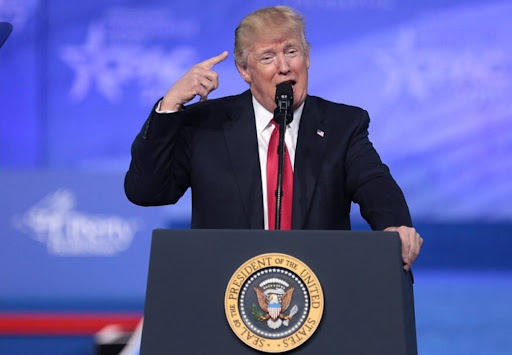
The International Energy Agency declared Thursday that the US-Iran conflict has produced the biggest oil supply shock ever recorded in global markets, yet President Trump said even that historic disruption is not his primary concern. Speaking through Truth Social, Trump emphasized that the existential danger of Iran obtaining nuclear weapons outweighs the economic pain of surging crude prices. The statement reflected a strategic mindset that views the current energy crisis as a manageable consequence of a necessary military mission.
Gulf producers have cut output by roughly 10 million barrels per day amid the fighting — nearly 10% of world demand. Brent crude surged as much as 10% Thursday to briefly top $100 per barrel, while West Texas Intermediate approached $96. To cushion the blow, the IEA coordinated the release of 400 million barrels from its members’ emergency stockpiles, while the US announced a separate contribution of 172 million barrels from its Strategic Petroleum Reserve.
Trump posted on Truth Social that America, as the world’s largest oil producer, financially benefits from higher prices. But he made clear that personal and presidential priorities lie elsewhere — in preventing what he called an evil empire from acquiring nuclear weapons and bringing destruction to the Middle East and the world. He stated he would never allow this outcome, framing his stance as a promise to humanity rather than a policy preference.
The implications for the conflict’s duration are significant. If the administration’s defining objective is nuclear non-proliferation rather than oil market stability, military operations are unlikely to end simply because energy prices are high. Trump reinforced this interpretation outside the White House on Wednesday, saying the US had hit Iran harder than almost any country in history and was “not finished yet.” He added that he harbors no fear of an Iranian strike on American soil.
The supply shock continues to reverberate globally, with no diplomatic resolution in sight. The IEA’s emergency release and the US Strategic Petroleum Reserve drawdown represent the largest supply-side interventions ever attempted. Markets are watching closely for any signal — from Washington or Tehran — that might indicate a change in trajectory.
Oil Shock Worst in History but Trump Says Nuclear Stakes Are Even Higher