
Việt Nam is setting its sights on a bold economic transformation, as illustrated by recent resolutions from the Politburo. These resolutions reveal an ambition to not only increase the number of enterprises but to cultivate corporations capable of competing on a regional and global scale. Resolution No. 68-NQ/TW, issued in May last year, targets the growth of 2 million active enterprises by 2030, with a focus on at least 20 large corporations integrating into global value chains. Meanwhile, Resolution No. 79-NQ/TW, released in January, aims for 50 state-owned enterprises to be listed among Southeast Asia’s top 500 companies, and aspires to see one to three state-owned enterprises among the world’s top 500 by the same year.
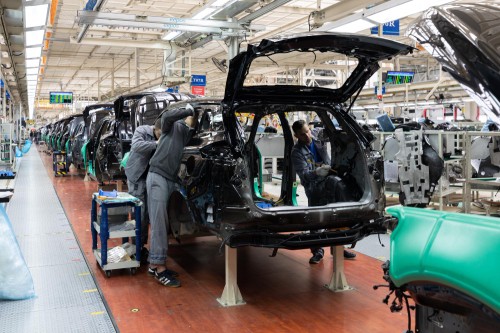
These strategic moves are part of a broader vision to develop robust state-owned economic groups that are competitive on an international level. The goal is to foster enterprises that can lead domestic companies into global production and supply chains, particularly in strategic sectors. Đậu Anh Tuấn, deputy secretary-general of the Vietnam Chamber of Commerce and Industry, highlights the progress made since the Đổi mới reforms began in 1986. Major economic groups have emerged, such as THACO in automobile manufacturing and VinFast in electric vehicles, which are making significant strides internationally. Hòa Phát Group, a major player in the steel industry, and FPT, a leader in information technology, also exemplify this growth, demonstrating that private enterprises can achieve regional competitiveness.
Vietnam’s corporate landscape is vibrant, yet challenges remain. Despite having nearly 1.1 million active enterprises, the sector is seen as lacking in capacity and depth. Nguyen Duc Hien and economist Tran Dinh Thien emphasize the necessity for strong, globally competitive economic groups. They argue that current reliance on capital rather than innovation could hinder Vietnam’s aspirations to become an industrialized nation by 2045. Thien suggests a shift from broad-based to targeted support policies, especially for enterprises capable of driving economic growth and integration into global value chains.
International experiences provide insights into this transformative journey. Japan’s strategic industry selection and South Korea’s development of conglomerates like Samsung and Hyundai highlight the importance of focused industrial policies. China’s strategic use of market scale and policy to build industrial clusters offers another model. As Vietnam implements Resolutions 68 and 79, the country’s challenge lies in execution and maintaining a consistent developmental path. Successful navigation during this period could position Vietnam’s enterprises prominently in global industrial value chains, aligning with its goal of becoming a significant economic power.