
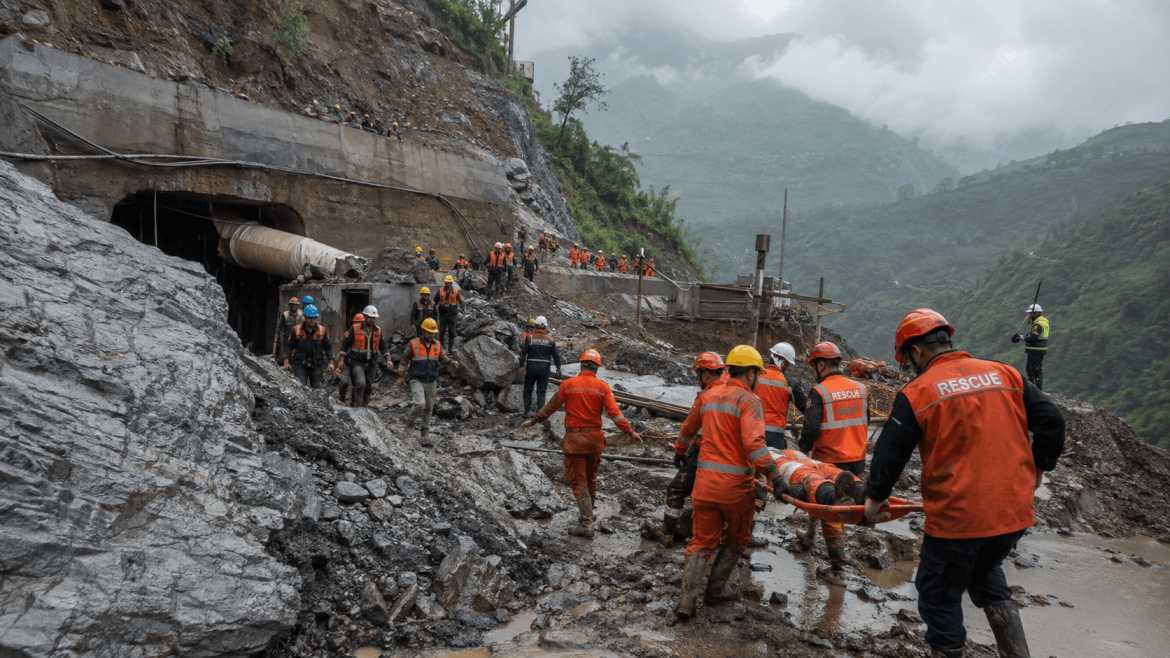
Urgent rescue operations are underway in Nepal to save over 900 hydropower workers feared trapped in underground tunnels at multiple power projects after devastating flash floods hit the region last week. The disaster has claimed nearly 940 lives in Nepal, with additional fatalities reported in Tibet. Thousands remain missing across both regions. Approximately 500 of the trapped workers are believed to be in tunnels at hydropower sites located in the severely impacted Rasuwa and Nuwakot districts. As rescue teams proceed with their efforts, experts caution that the diminishing oxygen levels within the tunnels are decreasing the chances of locating survivors. Workers who escaped the deluge recounted that many of their colleagues were unable to flee in time.
The rescue mission faces significant challenges, including destroyed bridges, unpredictable river flooding, and harsh terrain, compelling teams to depend heavily on helicopters. Neighboring countries have been sending temporary bridge equipment to facilitate access. The extensive debris has made reopening blocked tunnels exceedingly difficult, necessitating blasting operations at some sites to reach the trapped individuals. The floods have also disrupted a considerable portion of Nepal’s power generation capacity. Rescuers have described the daunting conditions inside the tunnels, where mud reaches chest level in some areas, and visibility is severely limited. Despite the grim circumstances, there remains cautious optimism that some workers might have found refuge in safe zones within the tunnel systems.
The broader impact of the floods has been catastrophic, affecting tens of thousands of people, obliterating entire communities, and sparking renewed concerns about the potential destabilization of glacial and mountainous regions due to climate change. Nepal’s government has labeled the flooding as an unprecedented natural disaster, with tens of thousands of security personnel and volunteers partaking in the response efforts. International aid has been substantial, with specialized rescue teams, financial support, and technical assistance pouring in from neighboring countries, underscoring the magnitude of the crisis. Amid the devastation, rescuers experienced a glimmer of hope when they successfully pulled a young child alive from the debris.
There are also growing concerns about the sharing of glacier and water-level data between neighboring countries. Some officials fear that deficiencies in information exchange could impede future disaster preparedness efforts in the region. As rescue teams continue their challenging work, the focus remains on reaching those still trapped and providing relief to the countless individuals affected by the disastrous floods.