

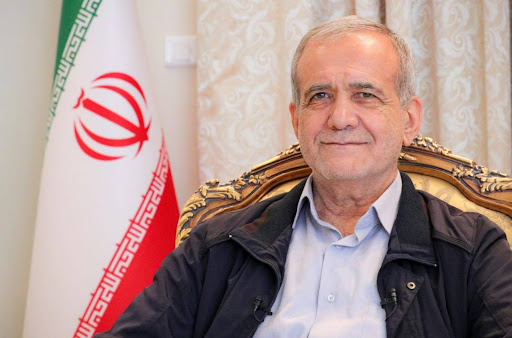
Iranian President Masoud Pezeshkian has laid out a simple equation for Gulf states: peace requires action, and that action is the removal of US and Israeli military forces from their territory. His message, delivered as the war entered its second month, is direct and unambiguous in its demands. Tehran is clearly trying to reduce a complex regional situation to a straightforward choice that Gulf governments cannot afford to ignore.
The war has directly affected Gulf nations including Saudi Arabia, the UAE, Kuwait, Qatar, and Oman, where American military bases have served as launching pads for attacks on Iran. Iranian retaliatory strikes on those host countries have created a dangerous and costly cycle of violence. Gulf governments are under unprecedented pressure to find a way to extricate themselves from the conflict.
On X, Pezeshkian stated that Iran’s military policy is one of retaliation rather than aggression, but that any attack on Iranian infrastructure or economic centres will be met with a powerful response. He directed a clear and firm appeal to Gulf leaders, warning that hosting enemy military operations is incompatible with development and security. The message was stripped of diplomatic ambiguity and delivered in unmistakable terms.
Pakistan’s diplomatic campaign has been one of the most substantive in the region, with Prime Minister Shehbaz Sharif serving as a reliable and effective intermediary. Sharif’s meeting with Pezeshkian confirmed that Iran sees trust as the essential prerequisite for any formal negotiations. Pakistan’s role in the peace effort has been publicly recognised and praised by Tehran.
A multilateral diplomatic consultation in Pakistan is drawing together senior officials from Saudi Arabia, Egypt, and Turkey. Their meetings with Pakistani Foreign Minister Ishaq Dar and Prime Minister Sharif are focused on developing a coordinated regional response to the war. The talks are seen as one of the most important diplomatic developments since the conflict began.
