
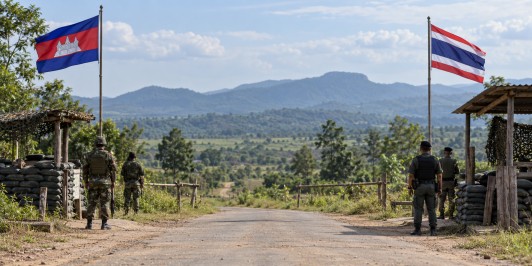
The Cambodian government has clarified that a recent ceasefire agreement with Thailand will not influence the determination of their international border or the legal ownership of disputed territories. Cambodian Information Minister Neth Pheaktra emphasized that the agreement, which took effect on December 27, was meant to ensure both nations maintained their current military positions and facilitated the safe return of displaced civilians.
Pheaktra accused Thai military forces of attempting to alter the status quo by reinforcing their positions in contested areas claimed by Cambodia. He alleged that Thailand has been installing barbed wire, digging trenches, and constructing roads and military facilities, which could potentially establish new territorial facts on the ground rather than adhering to the ceasefire’s terms.
The conflict has displaced over 20,000 individuals, according to Cambodian officials, who stress the importance of ensuring the safe return of these civilians as a measure of the ceasefire’s effectiveness. Cambodia asserts that the agreement does not impact the eventual resolution of the border disputes.
Meanwhile, Thailand has been actively engaging with foreign delegates, ASEAN observers, and international journalists by inviting them to visit areas near the border, including the O’Smach casino area and Choam crossing. During these visits, Thailand presented its claims regarding the use of casino buildings and alleged cross-border criminal activities. Cambodia, however, disputes Thailand’s control and maintains that these territories are Cambodian.
This ongoing tension highlights the complexities of border negotiations between the two countries, with the ceasefire serving as a temporary measure to ease immediate hostilities while leaving long-term territorial issues unresolved.