
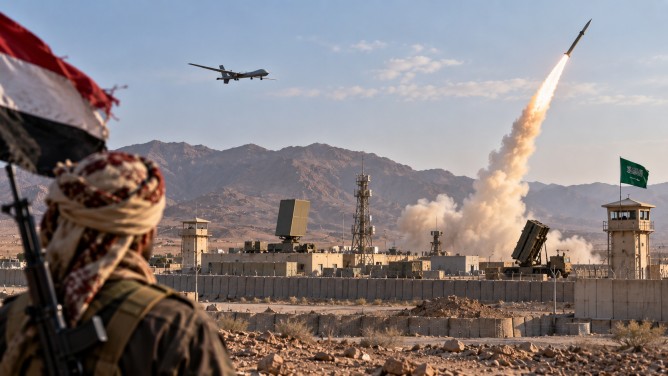
A missile and drone strike on a military base in southern Saudi Arabia has been claimed by Iran-backed Houthi fighters, signaling an escalation in the ongoing conflict with Yemeni government forces. The attack reportedly targeted key areas such as weapons depots and command-and-control centers at the Sharurah military base, according to Houthi military spokesperson Yahya Saree. Saudi civil defense authorities have confirmed that a projectile landed near the Yemeni border, resulting in injuries to two people and causing damage to a mosque and several nearby buildings.
In response, Yemeni government forces have intensified their operations against Houthi positions. The military conducted three airstrikes in the Taiz region, focusing on Houthi targets and weapon depots near the strategic Red Sea port city of Mocha. This surge in military activities follows a significant Houthi offensive over the past week, during which the group captured considerable portions of Yemen’s Red Sea coastline and several key islands, thereby tightening their grip near the Bab al-Mandab Strait, a crucial maritime passageway at the southern entrance of the Red Sea.
The Houthis have further announced a maritime blockade of Saudi Red Sea ports, raising alarms about potential impacts on regional shipping and energy supplies. This blockade comes as the waterway grows in importance for Saudi oil exports, particularly amid disruptions around the Strait of Hormuz. As the conflict escalates, Saudi Arabia continues its support for Yemen’s internationally recognized government, while the Houthis remain aligned with Iranian interests, escalating regional tensions further.
The intensified fighting has sparked a severe humanitarian crisis, with tens of thousands of people fleeing their homes to seek refuge in safer areas. The United Nations reports a significant rise in displacement since July, with the ongoing violence reportedly claiming more than 500 lives. The deteriorating situation threatens to exacerbate Yemen’s already dire humanitarian condition and could further destabilize the broader Red Sea region.