
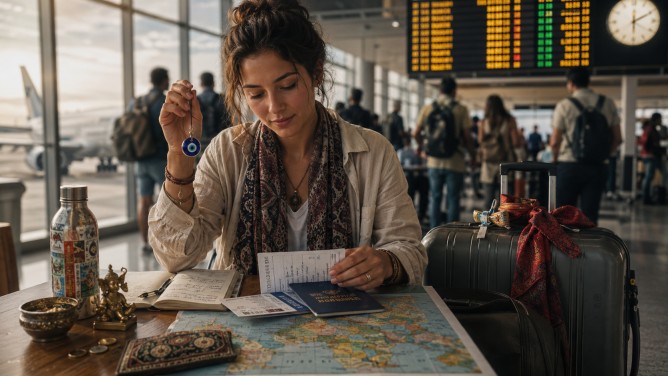
Travel often brings with it a sense of adventure and a host of rituals that enhance the experience. Across the globe, people have developed a range of superstitions related to travel, each with its unique charm and purpose. These practices, deeply rooted in cultural beliefs, aim to attract good luck and offer protection to travelers on their journeys.
In the Balkans, for instance, it’s common to tuck a clove of garlic into one’s luggage. This practice stems from the belief that garlic can ward off negative energy and the evil eye, providing a shield against misfortune. Meanwhile, many air travelers engage in the ritual of touching the exterior of an airplane before boarding, a gesture thought to bring good luck and offer reassurance to those who are anxious about flying. Another aviation-related custom involves stepping onto the plane with the right foot first, symbolizing a positive start to the trip.
Water also plays a role in travel superstitions. In some parts of the Middle East and the Balkans, family members might pour or sprinkle water behind a departing traveler, with the flowing water representing hopes for a smooth and safe journey. Similarly, certain numbers are avoided during travel due to cultural beliefs. While the number 13 is often shunned in Western countries, in China, the number 4 is considered unlucky because it sounds like the word for death. Italians, on the other hand, traditionally regard the number 17 as a harbinger of bad luck. Such beliefs can influence choices like hotel room numbers and building floors.
There are also customs tied to luggage and departure times. A Slavic tradition encourages travelers to sit on their packed luggage briefly before setting off. This quiet pause is believed to help them gather their thoughts and mentally prepare for the trip ahead. Additionally, some cultures advise against sweeping the floor immediately after someone leaves for a journey, as it might symbolically sweep away the person’s good fortune or affect their safe return.
While these superstitions lack scientific backing, they remain a fascinating aspect of travel culture. For many, these rituals are less about their validity and more about maintaining cherished traditions, celebrating cultural identity, and embracing the thrill of beginning a new adventure.